
Bitcoin Cash Casino: Privacy, Transaction Irreversibility and Operator Comparisons
The appeal of using Bitcoin Cash at an online gambling site hinges on how you value privacy versus convenience. Traditional payment methods link every transaction directly to your bank statement, creating a permanent financial trail visible to auditors or family members. Crypto payments obscure this direct link, though they do not erase the blockchain record entirely.
Wild card city casino no deposit bonus | max cash-out rules
This anonymity comes with operational trade-offs. If a withdrawal fails due to an incorrect address format, recovery is nearly impossible without operator intervention, unlike disputing a credit card charge. You must verify the destination wallet address character by character. For many players, the decision rests on whether the reduced friction of instant deposits outweighs the technical responsibility of managing private keys and ensuring accurate transfer details.
Cryptocurrency Integration and Blockchain Transaction Mechanics
Digital currency wagering systems operate by replacing conventional banking rails—such as credit cards, BPAY, or bank transfers—with decentralised peer-to-peer ledger networks. When a player interacts with a platform structured around cryptocurrency deposits, funds do not pass through traditional financial clearing houses. Instead, transactions are broadcast directly to a decentralised network of validating nodes. For networks utilising Bitcoin Cash (BCH), the transaction architecture is designed to prioritise rapid confirmation times and minimal network miner fees compared to legacy layer-1 blockchains.
The operational workflow begins when a user generates a unique cryptographic deposit address or scans a dynamic QR code provided by the gaming portal. The player’s personal wallet then signs the transaction using private key cryptography, authorising the transfer of digital assets. Once broadcasted, the transaction is bundled into a block by network miners. Because BCH maintains a larger block size limit relative to older architectures, network congestion remains low during peak operating periods, allowing transactions to clear within minutes without demanding high priority fees.
Unlike fiat payment processors that rely on intermediary merchant accounts, cryptocurrency routing relies entirely on autonomous smart contracts or direct wallet-to-wallet transfers. This architectural shift eliminates chargeback risks for operators, but it also alters the nature of user accountability. Blockchain transfers are irreversible once validated by the network. If funds are sent to an incorrect address or an unverified platform, there is no central bank, customer support hotline, or regulatory dispute mechanism capable of reversing the transaction.
Cryptographic transparency introduces an additional layer of ledger visibility. Every movement of funds is recorded on a public, immutable ledger. While wallet addresses are pseudonymous—identified only by alphanumeric strings instead of personal names—chain analysis tools can complete the transaction history from origin to destination. This openness contrasts sharply with traditional banking methods, where transaction details remain locked behind institutional privacy policies.
Operator comparison: operator details, accounts and verification
Duel and Crowngold raise different questions here, from account requirements to operator credentials.
| Brand | Details |
|---|---|
| Duel | Curacao license enables low-KYC entry; VIP tiers provide direct cash rakeback. |
| crowngold | 2,000+ games; strong crypto focus (BTC, ETH, USDT) with offshore licensing. |
| lottoland | NTRC licensed; no traditional casinos, only lottery/sports betting in AUD. |
| Punt123 | No welcome offers; $10 min deposit |
| pokiesboss | Info site; no direct gambling. |
Read the credentials for Crowngold in the context of the market they cover.
Lucky dreams casino australia responsible gambling tools
Duel: Crypto-First Infrastructure
Duel operates as a dual-platform environment where cryptocurrency transactions define the user experience. The site supports Bitcoin, Ethereum, Litecoin, Tether, Ripple, Dogecoin, Solana, and Binance Coin for both deposits and withdrawals. This crypto-first approach allows for near-instant payout processing once network confirmations are complete, bypassing traditional banking delays. Fiat on-ramps exist via Visa, Mastercard, Apple Pay, and Google Pay, but they function by converting funds into digital assets instead of holding AUD balances directly.
crowngold: Content Breadth and Providers
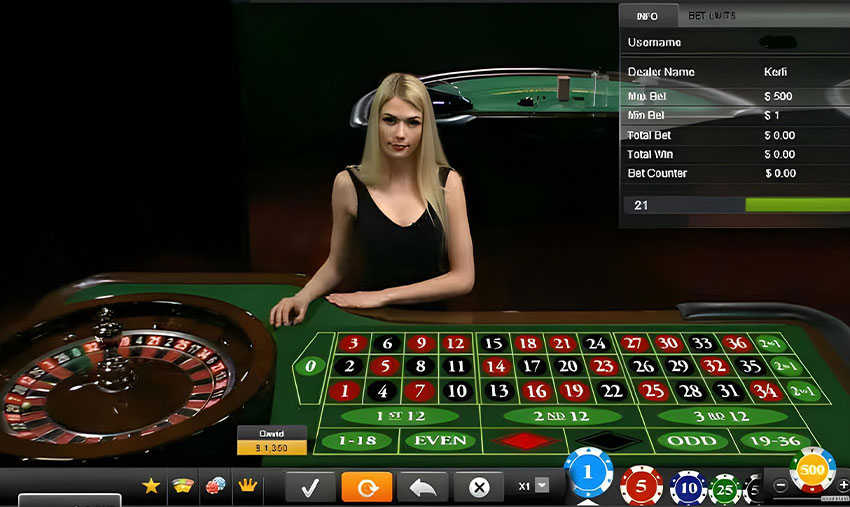
The game selection combines extensive slot libraries with table games and live dealer experiences, catering to players seeking variety beyond sportsbooks. Partnerships with industry-standard developers ensure regular content updates, including bonus buy slots and jackpot titles. The platform’s design prioritizes responsive navigation, ensuring that the transition between different game categories remains smooth on smaller screens. This breadth of content, supported by flexible payment options, defines its position as a generalist casino operator for Australian users.
lottoland: Legislative Compliance Structure
Lottoland Australia functions under the Northern Territory Racing Commission license, adhering strictly to the Interactive Gambling Act 2001. Consequently, the site does not offer traditional interactive online casino games like roulette or blackjack. Instead, it provides synthetic lottery betting, race wagering, and sports markets. All accounts settle in Australian Dollars (AUD), and credit card funding is restricted due to recent legislative updates, leaving debit cards, POLi, BPAY, and bank transfers as the primary deposit methods.
Punt123: Compliance-driven banking and verification
For punters seeking domestic coverage without promotional distractions, Punt123 delivers a streamlined interface centred on Australian racing and major sports like AFL and NRL. The platform excludes credit card deposits entirely, adhering to federal law that bans such transactions for online gambling. Users must fund accounts with debit instruments or direct transfers, then complete 100-point ID verification to access withdrawal functionality. Mobile apps mirror desktop features, ensuring consistent market access across devices. Responsible gambling tools integrate directly into account settings, allowing immediate deposit limits or self-exclusion via BetStop.
PokiesBoss: Review Portal Nature
PokiesBoss functions as an informational review portal instead of a real-money gambling operator. It does not host games, process deposits, or hold player funds. Instead, it aggregates data on third-party casinos, providing guides on banking, game selection, and licensing status for Australian users. Visitors cannot place bets or spin reels directly on the site; all transactions occur at external platforms linked through the reviews.
Game Mathematics, Volatility, and Provably Fair Verification
The Mathematical Expectation Behind the Interface
A casino game is designed with a built-in statistical advantage for the house, known as the Return to Player (RTP) percentage. This figure represents the theoretical payout over millions of spins or hands, not a guarantee for any single session. If a slot machine lists an RTP of 96%, it implies that for every $100 wagered across a vast sample size, $96 returns to players on average, leaving a $4 margin for the operator. This calculation assumes infinite play. In a realistic session of fifty spins, variance dominates. You might lose your entire bankroll in ten spins or double it in five. The RTP serves as a long-term diagnostic tool instead of a short-term prediction engine.
Volatility, often called variance, dictates how frequently and significantly payouts occur during these sessions. Low-volatility games offer frequent but small wins, preserving the balance sheet for longer periods. High-volatility titles pay out rarely, often resulting in extended dry spells followed by substantial hits. Neither type is mathematically "better"; they serve different risk appetites. A player with a limited budget who seeks entertainment duration should gravitate toward low volatility. Someone chasing a large multiplier can accept the high probability of rapid loss associated with high volatility. Understanding this distinction prevents the misinterpretation of losing streaks as evidence of rigging, when they are simply statistical noise inherent to the design.
New online casino australia | payments, RTP and bonus limits
Verifying Integrity Through Cryptographic Proof
Provably fair technology addresses the trust deficit in online gambling by allowing users to verify the randomness of each outcome independently. Unlike traditional Random Number Generators (RNGs), which operate within closed server environments, provably fair systems use cryptographic hashing algorithms such as SHA-256. The process relies on three components: a server seed (hidden until revealed), a client seed (provided by the user), and a nonce (a counter increasing with each bet). These inputs combine to generate a hash string that determines the result.
The critical exception lies in verification timing. You cannot verify a past result without the original server seed. Reputable platforms provide this seed after the fact or allow you to change it periodically. To check integrity, you must replicate the hashing process using external tools or the site’s verifier interface. If the generated hash matches the outcome displayed, the round was fair. If it does not match, either the data has been tampered with or the input seeds were altered incorrectly. This mechanism shifts control from blind trust to mathematical auditability. However, it applies primarily to crypto-native games like dice, crash, or plinko variants. Standard slots often rely on certified RNGs audited by third-party labs instead, requiring trust in the auditor instead of self-verification.
Distinguishing Audited RNGs from Self-Verifiable Models
Most digital table games and slots do not offer provably fair features because their logic involves complex state machines and multiple betting rounds. Instead, they depend on certification from independent testing agencies like eCOGRA, iTech Labs, or GLI. These bodies test the RNG software to ensure it meets statistical standards for randomness and distribution. A certificate confirms the code behaves correctly under controlled conditions, but it does not allow real-time checking by the player.
When choosing between these models, consider the transparency level required. Provably fair games suit those comfortable with technical validation and quick outcomes. Certified RNG games suit those who prefer familiar interfaces and regulated oversight. Note that a high RTP combined with low volatility creates a stable experience, whereas low RTP with high volatility offers high-risk, high-reward potential. The mathematics remain constant regardless of the currency used. Whether betting in AUD or cryptocurrency, the underlying probabilities do not shift based on payment method. Focus on the game’s specific metrics—RTP, max win potential, and hit frequency—instead of assuming blockchain integration automatically improves odds. Blockchain ensures transactional transparency and verifiable fairness in supported titles, but it does not alter the house edge.
Lottoland operates as a fixed-odds betting platform, not a traditional lottery retailer. This distinction fundamentally alters the odds structure for every wager placed through your account. Unlike genuine lotteries where prize pools fluctuate based on ticket sales and rollover mechanics, Lottoland sets static prices for outcomes like matching numbers or specific draw results. These fixed odds are determined by proprietary actuarial models that account for historical frequency, number distribution, and house margin. Consequently, the probability of winning remains constant regardless of how many other players participate in the same event. For instance, if you back a specific combination to win the Powerball, the payout multiplier is locked at the time of bet placement. It does not increase if fewer tickets are sold, nor does it decrease during high-volume periods. This predictability allows for clearer bankroll management but often results in lower maximum potential returns compared to progressive jackpots found in state-run competitions.
Kudos casino account access payment limits and safety checks
Frequently asked questions
The withdrawal fee changed after I requested the payout. Is this normal?
Fees are typically locked in at the moment you initiate the request, based on the network conditions or operator policies active at that time. However, some casinos adjust fees if the payout method itself undergoes a sudden regulatory change or liquidity crisis mid-processing. This is rare but possible during major market disruptions. Review your confirmation email for the exact fee stated at submission. If the deducted amount differs significantly without prior notice, submit a formal dispute citing the original receipt. Do not assume the new rate applies retroactively.
Keep Mobile Play Within a Clear Personal Limit
Mobile play demands strict boundaries. The screen hides your total spend, making it easy to drift past a planned limit. Set a deposit cap before logging in, not after. If the app lacks native tools for this, use the site’s responsible gambling menu or your bank’s spending controls. Pause immediately if chasing losses feels tempting. Gambling Help Online (1800 858 858) offers free advice at any hour.
Gibson casino | payments games and limits for AU players